

Windows catch the blame for high utility bills, and not without reason. Warm air leaks out in winter, hot air creeps in during summer, and your heating or cooling system works overtime to keep up. ENERGY STAR has estimated that air leakage can account for about 25% to 40% of the energy used for heating and cooling.
If you’re already thinking about window replacement in Livermore CA, these steps are still worth a try first.
1) Seal the fixed joints with caulk
Start with the quiet gaps: where interior trim meets the wall, where the window frame meets the casing, and where exterior trim meets siding.
Caulk is for joints that do not move, and the Department of Energy notes that basic air-sealing steps like caulking and weatherstripping often pay back quickly, sometimes within a year or less. Done neatly, it disappears once it dries and can cut drafts you feel along the edges. Skip any obvious drainage openings on the exterior; windows need a path for water to escape.
Many homeowners pair this with cosmetic maintenance. If you’re scheduling house painters in Livermore CA, ask them to point out failed caulk lines around window trim so you can reseal before paint goes on.
2) Weatherstrip the parts that move
Operable windows need flexible seals at the sash edges and meeting rails. Foam, rubber, or V-strip weatherstripping compresses when the window closes, then springs back when you open it. That compression is what blocks air.
3) Tighten latches so the sash pulls snug
A surprising number of “drafty” windows are simply not closing tight. Loose locks and worn keepers let the sashes float apart, leaving a narrow gap that you may not notice until a windy night. Tighten screws, replace tired hardware, and adjust the lock so it pulls the meeting rails together.
4) Add a clear interior film or panel
For immediate results in problem rooms, clear window film is a low-profile option. Seasonal shrink-film kits create a still air layer on the room side of the glass and can reduce that chilly sensation when you sit nearby. For a longer-term approach, interior storm panels or magnetic inserts add a sturdier air space and can be removed when you want the window fully open.
DOE also notes that low-e storm windows can save about 10% to 30% on heating and cooling costs, depending on what you already have installed.
Low-e window films can also reduce winter heat loss (and typically cut near-infrared solar radiation), though the best choice depends on your window type and sun exposure.
If you’re searching for window fitters near me, ask whether they measure for interior storms as well as full replacements. Fit matters more than thickness; a tiny gap can let air circulate and undercut the benefit.
Also Read: The ROI of Low-E3 Windows: Exploring Your Long-Term Savings
5) Use tight-fitting insulating shades
Window coverings are not just for privacy. Cellular (honeycomb) shades trap air in their pockets, slowing heat flow through the glass. They work best when they sit close to the frame and cover the top of the window with minimal gaps.
Shutters can also help when they close snugly and cover the full opening. In neighborhoods where people ask about plantation shutters in Livermore CA, the energy payoff usually comes from a tight fit and consistent use, not from fancy materials.
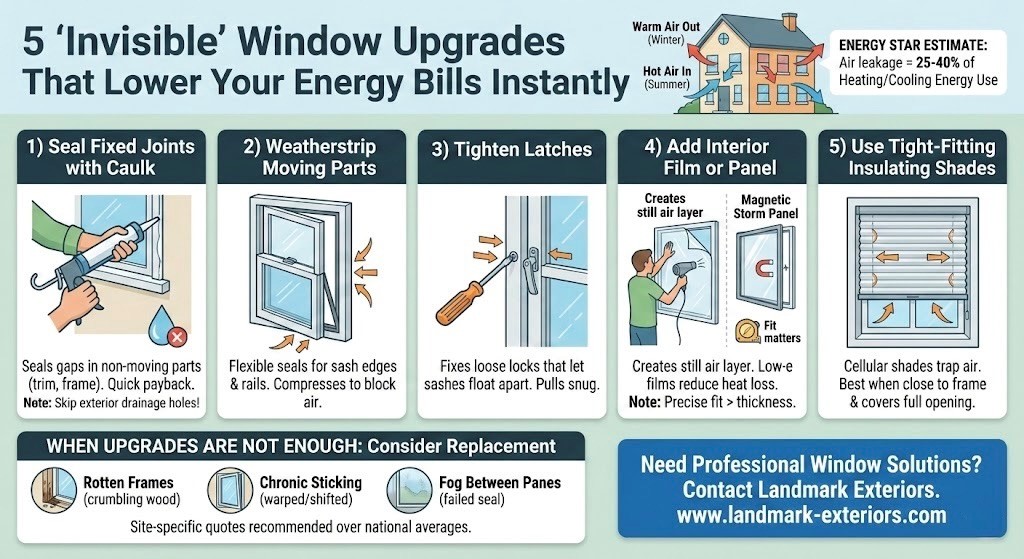
When upgrades are not enough
These fixes shine when the frames are solid and the window still operates well. If you see rot, chronic sticking, or fog between panes, replacement may be the practical call. Window replacement cost varies a lot by window type and installation conditions, so get a site-specific quote instead of relying on a national average.
Frequently Asked Questions
1) What are the fastest ways to stop cold drafts around windows?
Start with air leaks, not glass. Caulk the stationary seams around trim, then add weatherstripping where the sash meets the frame. Tighten the lock so the window pulls closed. On the worst offenders, apply a clear interior shrink-film kit to create a temporary air pocket. If one room stays stubbornly uncomfortable, an interior storm panel is often the next step.
2) What is the best window weatherstripping for old double-hung windows?
Spring bronze and quality V-strip last longer than bargain foam and keep the window operating smoothly. Install along the jambs where the sash slides, and add a compressible seal at the meeting rail if you feel air there. Clean the surface first so the adhesive holds.
3) Does low-e window film help with summer heat in sun-facing rooms?
Often, yes. Solar-control films can reduce heat gain through glass that gets strong afternoon sun. Results depend on orientation, existing coatings, and shading from trees or overhangs. Check that the film is approved for your window type, since some manufacturers limit film use on insulated glass.
4) Are interior storm window inserts worth it for energy savings?
They can be, especially on older windows that leak air. A well-fitted interior panel adds an insulating air layer and reduces drafts without changing exterior appearance. Low-e interior panels may improve comfort even more, and the best products include guidance to manage condensation.
5) When should I choose window replacement instead of upgrades?
Pick affordable window replacement when the frame is deteriorating, the sash will not stay open, or you have persistent fog between panes. Replacement also makes sense when you need code-compliant egress sizing. If the window is basically sound, start with sealing and attachments; they deliver comfort now and buy time.