
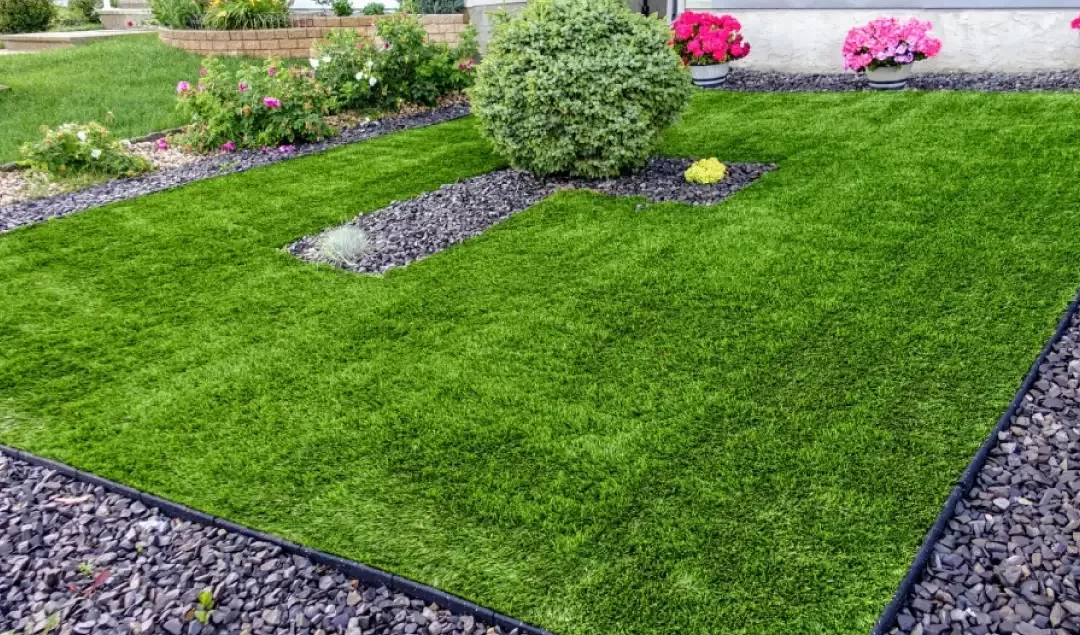
Pet owners often reach the same breaking point with a yard. The grass looks fine in spring, then the dog starts running the same fence line, urine burns show up, shaded areas turn muddy, and the side yard becomes a paw-print factory. K-9 turf gives homeowners a cleaner way to handle those daily problems without trying to keep natural grass alive in a space that pets use hard.
K-9 turf is a pet-focused artificial grass system made for dogs and active household pets. It uses synthetic grass fibers, drainable backing, a prepared base, secure edging, and pet-safe infill so urine can move through the surface instead of sitting on top. The goal is simple: create a yard area that stays usable, rinses clean, resists wear, and reduces odor when installed and maintained correctly.
This guide explains what K-9 turf is, how it differs from regular artificial grass, what good installation should include, and what homeowners should know before requesting an estimate for pet-friendly artificial grass installation.
Quick Answer: What is K-9 Turf?
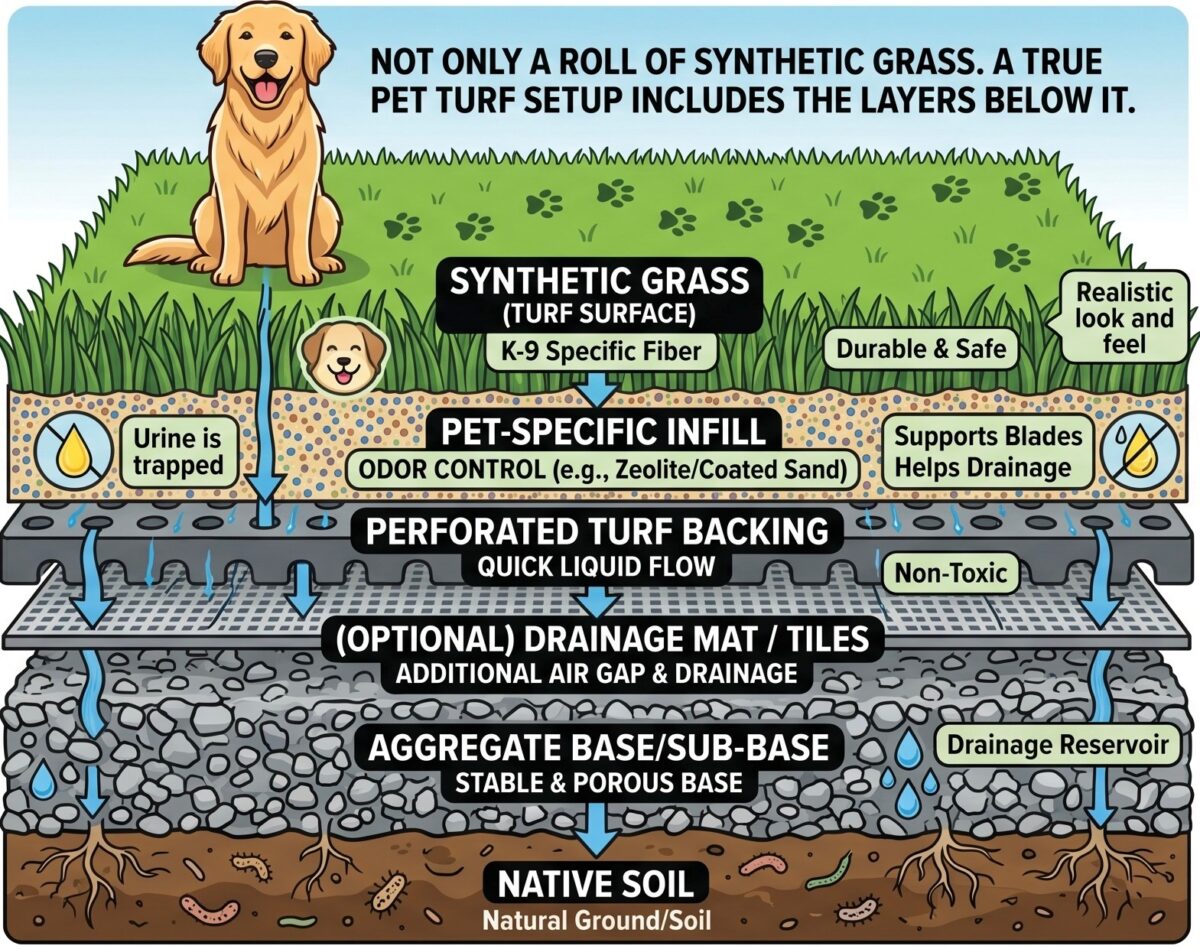
K-9 turf is artificial grass designed for pet areas such as backyards, dog runs, side yards, kennels, patios, and pet relief zones. It is not only a roll of synthetic grass. A true pet turf setup includes the turf surface plus the layers below it.
A well-planned K-9 turf system usually includes:
- Durable synthetic grass blades that can handle paw traffic
- Permeable or fast-drain backing
- A compacted, drainable base
- Secure seams and edges
- Pet-safe infill or odor-control material
- A cleaning plan for urine-heavy areas
The most common reason homeowners choose K-9 turf is not appearance alone. They want fewer muddy paws, fewer dead patches, easier cleanup, and a yard that holds up better to daily pet use.
K-9 Turf vs. Regular Artificial Grass
Regular artificial grass can look attractive in a front yard or decorative landscape area, but it may not be built for repeated pet use. K-9 turf puts drainage, cleaning, and durability first.
| Feature | Regular Artificial Grass | K-9 Turf |
| Main use | Decorative lawn or landscape | Pet yards, dog runs, side yards |
| Drainage | Varies by product | Designed as a priority |
| Urine handling | May trap odor if poorly installed | Built to move liquid through the system |
| Infill | Standard landscape infill | Pet-safe or odor-control infill |
| Edging | Basic lawn edge | Stronger edge planning for pets |
| Cleaning | Light rinsing | Routine rinsing and pet-safe cleaning |
| Best fit | Low-traffic lawns | Active pet areas |
The installation system matters as much as the turf itself. A pet-safe infill will not prevent odor if urine has nowhere to go. Good results come from matching product, base, slope, and maintenance.
While K-9 turf is designed specifically for pet-friendly durability, drainage, and odor control, it’s also important to understand how it differs from regular artificial grass before choosing the right option for your yard.
How K-9 Turf Handles Urine, Drainage, and Odor
Urine odor is usually the biggest concern. Homeowners want to know whether turf will smell worse than natural grass. The honest answer is that K-9 turf can stay clean, but only when the system is designed to drain and the homeowner keeps up with basic care.
When a dog urinates on turf, the liquid should pass through the backing and into the prepared base. From there, it should drain, disperse, or move toward a planned exit path. Drainage must be planned before installation, because stagnant moisture increases the chance of odor.
Odor often starts when urine concentrates in the wrong place. That can happen when:
- The base was not graded well
- The backing drains slowly
- The wrong infill holds moisture
- Organic material was left under the turf
- The area is never rinsed
- A concrete patio has turf glued flat with no drainage layer
A good installer thinks below the surface. The turf should be treated as a system, not a carpet. Artificial grass for dog urine needs drainage and rinsing to stay fresh.
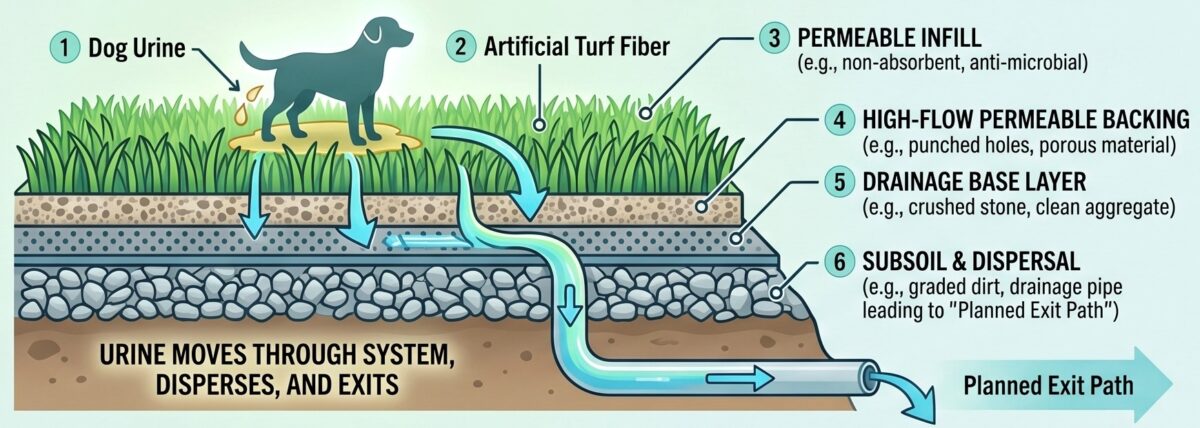
Pet-safe infill can help with odor control. Zeolite and other deodorizing materials are often used because they can reduce smells between rinses. Still, no product should be described as odor-proof forever. Odor-control infill works best with proper grading, airflow, rinsing, and occasional enzyme cleaner.
Understanding why artificial grass can smell with dogs helps explain how proper drainage, base grading, and pet-specific infill work together to prevent urine residue and ammonia odors from building up.
Is K-9 Turf Safe for Pets?
K-9 turf can be safe and comfortable for pets when homeowners choose appropriate materials and hire installers who understand pet areas. The surface should feel stable under paws, the seams should be secure, and edges should not lift when a dog digs or turns quickly.
Synthetic turf can get warmer than natural grass in direct sun. University of California Agriculture and Natural Resources has reported synthetic turf surfaces reaching very high temperatures, especially in hot inland conditions, and notes that artificial turf can be more than 60 degrees hotter than planted surfaces in some measurements. Penn State research also notes that natural grass is rarely over 100 degrees Fahrenheit on hot days, while synthetic turf can be much hotter.
That does not mean pet turf is a poor choice in every yard. It means design matters. Shade, lighter turf colors, rinsing before heavy use, smart placement, and leaving planted areas nearby can make the yard more comfortable.
Benefits of K-9 Turf for Homeowners
K-9 turf appeals to pet owners because it solves several ordinary yard problems at once.
- Cleaner paws: Dogs can come inside without tracking as much mud.
- No yellow patches: Synthetic turf does not die from urine the way natural grass can.
- Better wear resistance: High-traffic paths can stay green instead of turning into dirt.
- Easier cleanup: Solid waste can be picked up, and urine areas can be rinsed.
- Fewer lawn chemicals: Pet owners can avoid many fertilizers, herbicides, and pesticides used on natural lawns.
- Lower watering needs: Artificial turf does not require routine irrigation like living grass.
- Better use of difficult spaces: Shaded side yards, narrow strips, and worn pet zones become usable again.
Water use also matters in California. The U.S. Environmental Protection Agency says residential outdoor water use in the United States accounts for nearly 8 billion gallons of water each day, mainly for landscape irrigation. For Livermore and East Bay homeowners, pet turf can be part of a water-conscious yard plan, especially when paired with trees, shrubs, mulch, and planted borders rather than replacing every living surface.
Best Places to Install K-9 Turf
K-9 turf works best where natural grass struggles or pets put heavy pressure on one area. The right layout depends on the yard, the dog’s habits, and how the family uses the space.
Common installation areas include:
- Side yards that stay muddy or shaded
- Dedicated dog runs
- Backyard potty zones
- Kennel or boarding areas
- Small patios and courtyards
- Around pool decks where mud is a problem
- Apartment or condo pet relief areas
- Training zones for puppies
- Fence-line paths where dogs run daily
Many homeowners do not need turf across the entire yard. A targeted pet zone may solve the worst mess while preserving planted areas for shade, cooling, and curb appeal.
What a Proper K-9 Turf Installation Should Include
Good pet turf installation starts with a site review. The installer should look at slope, drainage, soil, sun exposure, shade, access, and pet behavior. A side yard used by two large dogs needs a different plan than a small patio used by one puppy.
A typical professional process includes:
- Site inspection: Review drainage, low spots, odor concerns, and traffic patterns.
- Removal: Take out natural grass, weeds, roots, and organic material.
- Excavation: Create enough depth for the base and drainage layer.
- Base preparation: Add a drainable aggregate base and compact it evenly.
- Grading: Shape the area so liquid does not sit in low pockets.
- Turf layout: Plan grain direction, seams, and cuts.
- Seaming: Join sections securely so dogs cannot pull at loose edges.
- Edging: Anchor borders near fences, gates, planters, and concrete.
- Infill: Add pet-safe infill where appropriate.
- Final grooming: Brush the fibers, rinse the area, and inspect the finished surface.
For patios or concrete slabs, drainage needs extra care. Some pet turf specialists warn that turf glued directly to concrete can trap liquids and create strong odors unless a raised drainage layer or drain tile system is used.
K-9 Turf Maintenance: How to Keep Pet Turf Clean
K-9 turf is low maintenance, not no maintenance.
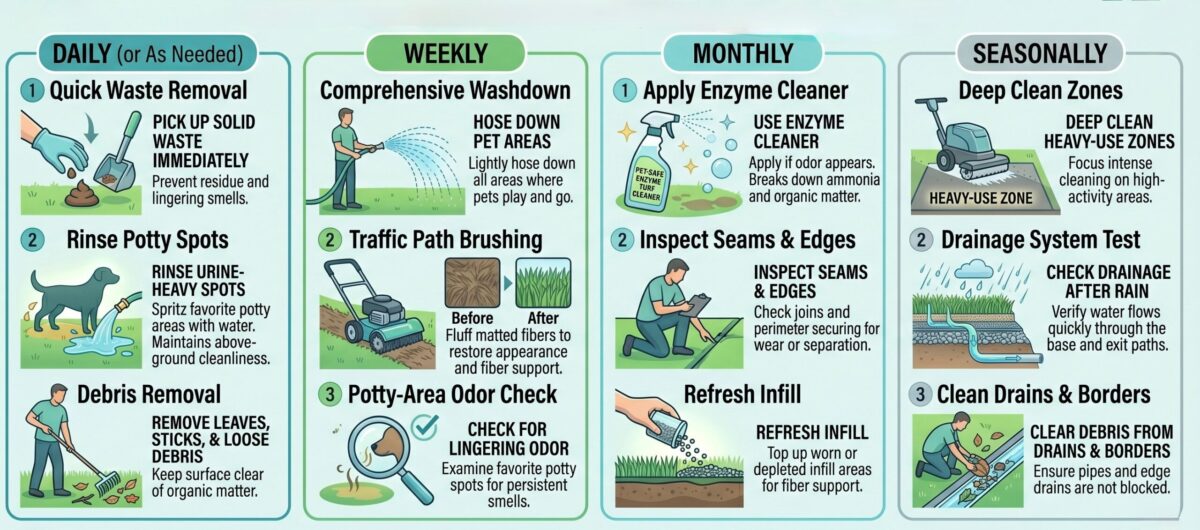
Use this simple care rhythm:
- Daily or as needed:
- Pick up solid waste quickly
- Rinse urine-heavy spots
- Remove leaves, sticks, and loose debris
- Weekly:
- Hose down pet areas
- Brush high-traffic paths
- Check for lingering odor near favorite potty spots
- Monthly:
- Use a pet-safe enzyme cleaner if smells appear
- Inspect seams and edges
- Refresh infill in worn areas if needed
- Seasonally:
- Deep clean heavy-use zones
- Check drainage after rain
- Clear debris from drains and borders
If a dog uses the same corner every day, that corner needs more rinsing than the rest of the yard.
How Long Does K-9 Turf Last?
The life of K-9 turf depends on product quality, installation, sun exposure, pet size, traffic, cleaning habits, and base performance. A decorative front lawn may age differently than a narrow dog run used all day.
High-use areas may flatten or wear faster, especially near gates, fence paths, or potty spots. Brushing the fibers, rinsing regularly, and fixing drainage problems early can help the surface last longer.
How Much Does K-9 Turf Installation Cost in 2026?
The K-9 turf installation cost varies because yards are rarely the same. A small side-yard pet run may be straightforward. A larger backyard with poor drainage, tree roots, uneven soil, or concrete transitions may need more preparation.
Cost factors include:
- Square footage
- Removal of existing grass or debris
- Base depth and material
- Drainage needs
- Turf quality
- Infill type
- Number of seams
- Edge complexity
- Site access
- Local labor costs
- Whether the project is a full yard or a smaller pet zone
A cheaper installation can cost more later if urine pools, seams lift, or the base settles. The best estimate explains the full system, not only the turf price per square foot.
K-9 Turf vs. Natural Grass for Pets
Natural grass still has real strengths. It stays cooler, supports soil life, and feels familiar. It also needs mowing, watering, reseeding, and repair. For some pet owners, the yard simply cannot keep up.
| Category | Natural Grass | K-9 Turf |
| Mud | Common in wet or shaded areas | Much lower when drained well |
| Urine spots | Can yellow or die | No dead grass patches |
| Digging | Easy for many dogs | Harder with secure edges |
| Watering | Usually required | Minimal rinsing, not irrigation |
| Heat | Usually cooler | Can get warm in direct sun |
| Cleanup | Less controlled | Can be rinsed and cleaned |
| Appearance | Seasonal | Green year-round |
The best choice may be a mixed yard. Turf can handle the pet traffic zone, while planted beds and trees provide shade, cooling, and a more natural setting.
Common Mistakes to Avoid
Pet turf problems usually come from shortcuts, not from pets being pets.
Avoid these mistakes:
- Choosing decorative turf for a heavy dog area
- Ignoring slope and drainage
- Leaving organic material under the turf
- Using infill that traps moisture
- Skipping secure edging
- Installing flat turf directly over concrete without drainage
- Assuming rain will clean everything
- Forgetting heat planning
- Hiring an installer with no pet turf experience
Who Should Consider K-9 Turf?
K-9 turf may be a strong fit for homeowners who deal with:
- Muddy side yards
- Dogs that run the same path daily
- Urine spots and dead grass
- Shaded areas where grass will not grow
- Small yards that need easy cleanup
- Pet relief areas near patios
- Busy households that want less lawn care
It may not be right for homeowners who want a completely maintenance-free surface, have no way to rinse the area, or need a cooler living surface in full afternoon sun. Those yards may need shade, partial turf, or a hybrid design.
K-9 Turf Installation in Livermore and the Bay Area
Artificial grass installation in Livermore should speak to local conditions: dry summers, inland heat, water-conscious landscaping, and active family yards. Homeowners in Livermore, Pleasanton, Dublin, San Ramon, Danville, Tracy, Fremont, and nearby East Bay cities often need practical outdoor surfaces that can handle pets without constant repair.
A local installer like Landmark Exteriors can evaluate slope, drainage, sun exposure, and use patterns on site.
Ready to create a cleaner, lower-maintenance outdoor space with professionally installed artificial grass? Contact Landmark Exteriors today to schedule an estimate for turf installation tailored to your lawn, pet area, patio, play space, or putting green.
Frequently Asked Questions
Is K-9 turf different from regular artificial grass?
Yes. K-9 turf is designed for pet use, with better drainage, stronger wear resistance, pet-safe infill options, and installation details that account for urine, digging, and daily paw traffic.
Does K-9 turf smell when dogs pee on it?
It should not smell when installed and cleaned properly. Odor usually comes from trapped urine, poor drainage, the wrong infill, or skipped rinsing.
Can dogs poop on K-9 turf?
Yes. Pick up solid waste as soon as possible, rinse the area, and use a pet-safe cleaner when needed. Treat it much like a hardscape surface that needs routine washing.
What goes under K-9 turf?
Most systems use a compacted aggregate base shaped for drainage. Some projects need added drainage layers, especially on concrete or in low spots.
Is pet turf worth it for a small yard?
It can be. Small yards often receive heavy pet traffic in a tight area, so turf may reduce mud, bare soil, and repeated grass repairs.
How often should pet turf be rinsed?
Rinse favorite potty areas several times a week, or more often for multiple pets. Light-use areas may need less attention, but odor should guide the schedule.
Is K-9 turf too hot for dogs?
It can get hot in direct sun. Shade, rinsing, lighter materials, and partial-yard designs can help. Pet owners should test the surface with their hand before letting pets stay on it during hot afternoons.
Can K-9 turf be installed in a side yard?
Yes. Side yards are one of the best uses for artificial turf because they often become muddy, narrow, and hard to grow with natural grass.
Will rain clean K-9 turf?
Rain helps rinse the surface, but it should not replace regular cleaning in potty zones. Urine-heavy areas still need direct rinsing.
Key Takeaway
K-9 turf is a practical option for homeowners who want a cleaner, easier-to-manage yard for pets. It can reduce mud, prevent dead grass patches, and make waste cleanup more predictable. The best results come from honest planning: choose the right turf, prepare the base, design for drainage, secure the edges, plan for heat, and keep a simple cleaning routine.
A professional can inspect how the yard drains, where pets spend time, and whether a full-yard installation or targeted pet zone makes more sense.